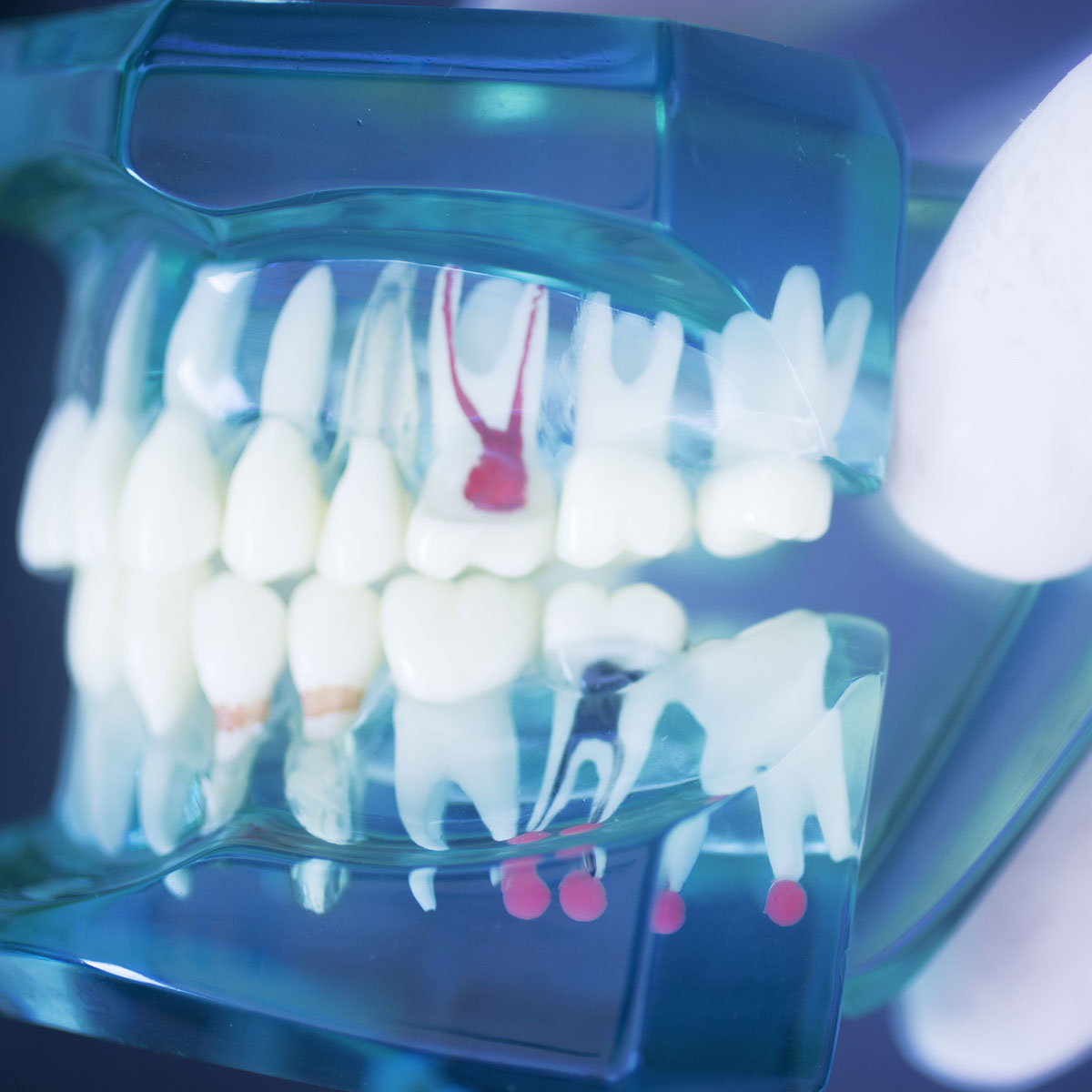
When root canal treatment is needed

When root canal treatment is needed

  • Persistent toothache or sensitivity to heat, cold, or pressure
  • Swelling or gum tenderness near the tooth
  • A deep cavity, crack, or trauma that has reached the pulp
  • A previously treated tooth where the infection has returned
  • To save a natural tooth instead of extracting it

If left untreated, the infection can spread to the bone, cause an abscess, and eventually lead to tooth loss.

How the treatment works
1

Examination and diagnosis

We perform a thorough clinical and radiographic (or 3D CBCT) examination to assess the condition of the tooth and determine the most effective treatment approach.

2

Local anesthesia and isolation

The tooth is completely numbed to ensure a pain-free procedure. A protective rubber dam is placed around the tooth to keep it sterile and dry.

3

Access and removal of the infected pulp

A small opening is made in the tooth, and the infected or necrotic tissue is carefully removed from the pulp chamber and root canals.

4

Cleaning and disinfection

The canals are shaped and cleaned using fine rotary instruments and disinfected with antibacterial solutions to eliminate any remaining bacteria.

5

Filling and sealing

The cleaned canals are filled with a biocompatible material (such as gutta-percha) and sealed tightly to prevent re-infection.

6

Final restoration

The tooth is restored with a filling or crown to restore its full strength, function, and natural appearance.

1

Examination and diagnosis

We perform a thorough clinical and radiographic (or 3D CBCT) examination to assess the condition of the tooth and determine the most effective treatment approach.

2

Local anesthesia and isolation

The tooth is completely numbed to ensure a pain-free procedure. A protective rubber dam is placed around the tooth to keep it sterile and dry.

3

Access and removal of the infected pulp

A small opening is made in the tooth, and the infected or necrotic tissue is carefully removed from the pulp chamber and root canals.

4

Cleaning and disinfection

The canals are shaped and cleaned using fine rotary instruments and disinfected with antibacterial solutions to eliminate any remaining bacteria.

5

Filling and sealing

The cleaned canals are filled with a biocompatible material (such as gutta-percha) and sealed tightly to prevent re-infection.

6

Final restoration

The tooth is restored with a filling or crown to restore its full strength, function, and natural appearance.

Why choose Nordic Dental

Why choose Nordic Dental

  • Modern digital imaging and precise endodontic techniques
  • Painless, efficient, and high-quality treatment
  • Focus on preserving your natural tooth whenever possible
  • Experienced and caring dental professionals
  • Clear aftercare instructions and follow-up support
Frequently Asked Questions

Does root canal treatment hurt?

How many visits are required?

How long will a treated tooth last?

Is extraction better than a root canal?

Will my tooth look different after treatment?

What if pain returns after several months or years?

Can I eat or work normally after the procedure?

Are there any risks?

What happens if I delay treatment?

How do I care for my tooth afterward?

Book your appointment

At Nordic Dental, our mission is to create smiles that radiate confidence, harmony, and health.

Your information

Location

No locations available

Date

Please select the location for your visit to display available dates.

Your message (optional)

Your privacy is important to us.

We use cookies and other data storage technologies on our website to ensure its proper functioning, analyze traffic, and improve your user experience. Some cookies are essential for the website to operate, while others help us understand how you use our site and allow us to display personalized content and advertisements.

For more information, read our Cookie Policy.